
Air Quality Advice

What you can do to help improve local air quality and reduce your exposure to air pollution across South Bank and Waterloo
High air pollution can irritate airways, worsen existing health conditions and increase health risks, especially near busy roads. Older people, pregnant people, families with young children and those with heart or lung conditions are more sensitive to pollution and particularly at risk. To help improve air quality and protect yourself and those around you, consider the following ideas.
Take action as a local resident
.
Choose to walk and cycle over driving
Walking and cycling are non-polluting, lower exposure ways to travel. Exhaust fumes are some of the main causes of air pollution in Southwark and Lambeth. Cars can also have pollution levels inside them that are twice that outside meaning you are often exposed to higher levels of pollution driving than when cycling or walking.
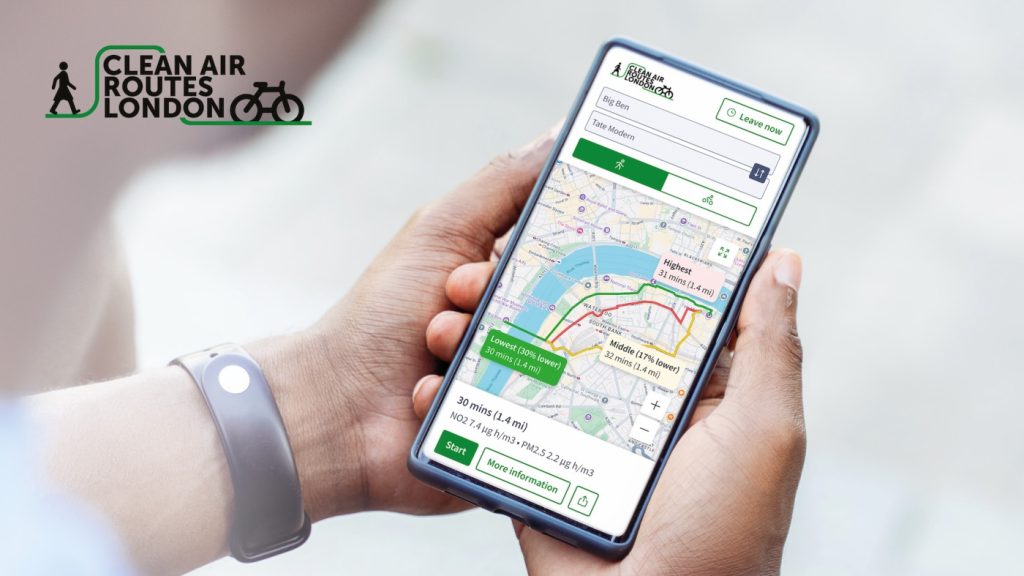
- Walk and cycle on quieter back streets and parks, avoiding hotspots and main roads like Waterloo Road. You can map Clean Air Routes London for safer, lower-pollution routes, or take a look at the Sustains Us Living Green Map to find parks near you.
- Lambeth and Southwark councils offer free cycle training and “try before you bike” schemes. Lambeth and Southwark councils also provide assistance for repairing and looking after your bike.
- For trips where you need to carry more – such as school drop-off or moving house – local business OurBike offers cargo bikes for hire.
- Walk on the inside of the pavement away from traffic where possible and in high pollution periods go out earlier in the day when air quality is usually better.
If you do need to drive, make pollution-informed choices
- Avoid peak traffic times, drive smoothly and use air-recirculation in slow-moving traffic.
- Avoid leaving your engine running while stationary. Help share about the harms of engine-idling by volunteering at or attending local anti-idling events.
- Consider carsharing instead of owning a car. London has a large network of shared cars that can be rented – take a look at car clubs in Lambeth or Southwark.
- If you do need to own a vehicle, keep it serviced regularly to help it run more efficiently
- Consider switching to electric. Older cars tend to be significantly more polluting. You can find out more about using electric vehicles in Southwark and Lambeth. We have an extensive network of electric vehicle charging stations and infrastructure.
- If buying new, look for the vehicle’s ‘Euro standard’ from Euro 1 (most polluting) to Euro 6 (least polluting). This information can be found in the car’s logbook or by searching the Government’s online vehicle database.
Keep up-to-date with air pollution levels using forecasts and alerts
Plan trips and activities around lower-pollution times. AirTEXT provides free alerts via text or app. London Air provides email alerts and mobile app updates.
Get involved in our local green spaces
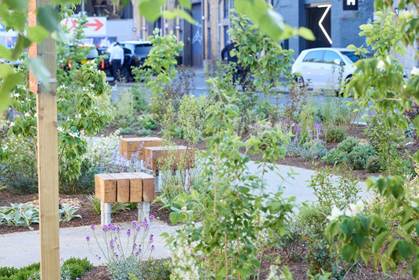
Taking part in physical activity in parks and other low-traffic areas allows you to breathe cleaner air and improves your general health. Take a look at the Sustains Us Living Green Challenge to find a park near you.
Join local gardening groups or volunteer sessions to help look after parks, gardens and shared green spaces in your neighbourhood, like Waterloo Green Group, Archbishop’s Park, Coin Street Gentle Gardening, or St John’s Churchyard.
You can care for local trees with Lambeth’s Tree Guardians programme, or talk to Bankside Open Spaces Trust for gardening tips and support with gardening on at home.
During high pollution periods, limit strenuous outdoor activity and consider local indoor activities
- Visit Colombo Centre gym to exercise indoors at one of our community gyms.
- Visit one of our indoor play and community centres. Oasis Playspace is a fully-equipped children’s centre located in Geraldine Mary Harmsworth Park, near the Imperial War Museum. Oasis Centre Community Space offers activities during the weekdays, including a library.
- Check out these directories for more things to see and do across South Bank and Waterloo.
Support cleaner air for children and those most vulnerable to air pollution
- Look out for your neighbours, including those most vulnerable to air pollution like children, pregnant people, older people, and those living with health conditions. Offer to collect groceries or medication when the air quality index is high.
- School Streets are car-free spaces around schools during drop-off and pick-up times. Get involved in helping create or maintain School Streets so as to protect school children from air pollution through Mums for Lungs
- Keep your reliever or rescue inhaler with you if you use one and follow your action plan if symptoms worsen. Head to Asthma + Lung UK for more guidance.
Reduce air pollution at home
- Avoid using wood burners, open fires or bonfires, unless it is your only source of heat. Recycle or compost waste instead and consider air-quality impacts before installing a wood stove or lighting a fire. You can pledge to #StopWoodBurning with Lambeth Council or sign the Clean Air Pledge with Southwark Council. Find out more about recycling and composting options available to Lambeth or Southwark residents.
- Keep your home well-ventilated and avoid indoor sources of pollution like candles, incense or woodfires.
- Upgrade gas-powered boilers or improve your home’s energy efficiency where possible. Old boilers are often a major source of air pollution.
- Get free, personalised energy saving advice from the local LSBU Energy Advice Centre and explore available energy efficiency grants for Lambeth or Southwark residents.
Rethink how you shop
Reduce the number of vehicles for online deliveries on your street by shopping locally on foot or by bike, choosing green delivery slots, combining orders into one delivery, or collecting from a local pick-up location.

Take action as a local business
.
Reduce commuting and travel during high pollution periods
- Enable home or hybrid working where possible to reduce peak-time travel and traffic around workplaces and residential streets.
- Stagger working hours to avoid high pollution periods like rush hour. Flexible start and finish times can spread travel demand, easing congestion at the most polluted times of day.
Encourage active, low-pollution travel for employees
Support walking, cycling, or public transport for commuting and short work trips. Promoting cleaner air walking and cycling routes for employees and customers can help them avoid pollution hotspots. Create a workplace travel plan, promote the Cycle to Work scheme, and provide secure bike storage, showers and lockers. You can also share Lambeth and Southwark councils’ free cycle training and “try before you bike” schemes, and signpost free Dr Bike events in Lambeth or Southwark.
Make informed delivery and fleet choices
- Source goods and services locally to reduce transport-related pollution.
- Work with suppliers or your operations team to reduce delivery frequency, combine loads and reduce congestion and pollution from your deliveries. For local deliveries, use cargo-bike services like OurBike.
- Offer click-and-collect to local customers to reduce courier journeys on surrounding streets.
- Require delivery and fleet drivers to switch engines off when parked. Cut down pollution by offering efficient driving training to employees using subsidies available with Energy Saving Trust Training.
- If you need to buy or hire vehicles for business travel, choose electric or low-emission vehicles, and avoid older diesel cars. The Energy Saving Trust provide advice and support for businesses to lower emissions from transport.
- Support the local electric vehicle network by installing charging stations on your premises for employees and customers.
Reduce waste volumes and waste collections where possible
Fewer collection trips reduce local congestion and pollution. Check if your neighbouring businesses use your same waste provider as you might be able to consolidate waste pick-up days/times and possibly even share a waste collection site. You may be able to get support through WeAreWaterloo’s waste reduction initiatives for businesses.
Upgrade your buildings and energy systems
Make your building more energy-efficient by improving insulation, using better heating controls, and keeping ventilation systems in good condition. Where possible, switch from gas, oil, or coal heating to renewable electricity which produces less air pollution. Small businesses may be able to get support through the Mayor of London’s Cleaner Heat Cashback or from the Carbon Trust.
Manage construction, demolition and maintenance works carefully
Dust, diesel fumes, and fine particles can harm the health of employees and nearby residents. Use dust suppression, low-emissions machinery, and clear site management plans to minimise air pollution during works. Visit Lambeth or Southwark websites for guidance.
Join clean air initiatives and engage your employees
Take part in programmes such as Business for Clean Air, and create a clean air policy for your workplace.
Install green infrastructure such as ivy walls, green screens, or hedging to help trap pollutants. Talk to organisations like Bankside Open Spaces Trust for advice.
Support local green initiatives to improve air quality
Support Bankside Open Spaces Trust who care for green spaces, or coordinate staff volunteering days at nearby parks and gardens through programmes like the Connecting Waterloo Community Project.
Monitor air quality and plan ahead
Look out for and support employees that are most vulnerable to air pollution. Pregnant people, older employees and those living with health conditions are at greater risk. Check local air pollution forecasts and sign up for alerts so you can take early action when the air quality index is high. AirTEXT provides free alerts via text or app. London Air provides email alerts and mobile app updates.
Provide a refuge space for your community where possible
If you have suitable indoor space, consider making it available as a place where people can spend time away from polluted outdoor air during high pollution periods, and communicate this clearly to your employees and customers.

Take action as a local community group or organisation
.
Share clear, trusted information about air pollution and health
Check local air pollution forecasts and sign up for alerts so you can share timely information with the community. The Clean Air Hub provides clear, accessible information you can share through newsletters, events, noticeboards, and social media. Share our live clean air map and to promote local community centres that are open and accessible during high pollution periods. AirTEXT provides free alerts via text or app. London Air provides email alerts and mobile app updates.
Promote walking, cycling and low-pollution activities on quieter routes
Highlight local support available, including OurBike cargo bike hire, Lambeth and Southwark councils free cycle training, “try before you bike” schemes, inclusive and family cycling lessons, and free Dr Bike events in Lambeth or Southwark. You can map Clean Air Routes London for safer, lower-pollution routes, or explore the Sustains Us Living Green Map to find nearby parks.
Encourage people to avoid busy roads by walking and cycling through quieter back streets, parks, and green spaces. Going out earlier in the day can reduce exposure when air quality is usually better.
Support community-led action for cleaner air
Help your community, particularly those most vulnerable to air pollution, raise concerns and take action on air pollution by developing a shared clean air vision or simple action plan. Action for Cleaner Air provides guidance and support for communities to shape local decisions and policy. This could include offering a refuge space during high pollution periods if you have suitable indoor space. You can promote this through your website, noticeboards, and social media, alongside our live clean air map, and information about open community centres.
Encourage time spent in parks and green spaces
Promote local green spaces as places for activity, social connection, and respite from traffic pollution. Meeting in parks allows people to breathe cleaner air while improving general health. Explore the Sustains Us Living Green Map to find nearby parks.
Encourage participation in gardening clubs and green spaces projects like Rooted lunchtime gardening, Coin Street’s Gentle Gardening and Edible Marsh.

Take action as a local resident
.
Choose to walk and cycle over driving
Walking and cycling are non-polluting, lower exposure ways to travel. Exhaust fumes are some of the main causes of air pollution in Southwark and Lambeth. Cars can also have pollution levels inside them that are twice that outside meaning you are often exposed to higher levels of pollution driving than when cycling or walking.
- Walk and cycle on quieter back streets and parks, avoiding hotspots and main roads like Waterloo Road. You can map Clean Air Routes London for safer, lower-pollution routes, or take a look at the Sustains Us Living Green Map to find parks near you.
- Lambeth and Southwark councils offer free cycle training and “try before you bike” schemes. Lambeth and Southwark councils also provide assistance for repairing and looking after your bike.
- For trips where you need to carry more – such as school drop-off or moving house – local business OurBike offers cargo bikes for hire.
- Walk on the inside of the pavement away from traffic where possible and in high pollution periods go out earlier in the day when air quality is usually better.
If you do need to drive, make pollution-informed choices
- Avoid peak traffic times, drive smoothly and use air-recirculation in slow-moving traffic.
- Avoid leaving your engine running while stationary. Help share about the harms of engine-idling by volunteering at or attending local anti-idling events.
- Consider carsharing instead of owning a car. London has a large network of shared cars that can be rented – take a look at car clubs in Lambeth or Southwark.
- If you do need to own a vehicle, keep it serviced regularly to help it run more efficiently
- Consider switching to electric. Older cars tend to be significantly more polluting. You can find out more about using electric vehicles in Southwark and Lambeth. We have an extensive network of electric vehicle charging stations and infrastructure.
- If buying new, look for the vehicle’s ‘Euro standard’ from Euro 1 (most polluting) to Euro 6 (least polluting). This information can be found in the car’s logbook or by searching the Government’s online vehicle database.
Keep up-to-date with air pollution levels using forecasts and alerts
Plan trips and activities around lower-pollution times. AirTEXT provides free alerts via text or app. London Air provides email alerts and mobile app updates.
Get involved in our local green spaces
Taking part in physical activity in parks and other low-traffic areas allows you to breathe cleaner air and improves your general health. Take a look at the Sustains Us Living Green Challenge to find a park near you.
Join local gardening groups or volunteer sessions to help look after parks, gardens and shared green spaces in your neighbourhood, like Waterloo Green Group, Archbishop’s Park, Coin Street Gentle Gardening, or St John’s Churchyard.
You can care for local trees with Lambeth’s Tree Guardians programme, or talk to Bankside Open Spaces Trust for gardening tips and support with gardening on at home.
During high pollution periods, limit strenuous outdoor activity and consider local indoor activities
- Visit Colombo Centre gym to exercise indoors at one of our community gyms.
- Visit one of our indoor play and community centres. Oasis Playspace is a fully-equipped children’s centre located in Geraldine Mary Harmsworth Park, near the Imperial War Museum. Oasis Centre Community Space offers activities during the weekdays, including a library.
- Check out these directories for more things to see and do across South Bank and Waterloo.
Support cleaner air for children and those most vulnerable to air pollution
- Look out for your neighbours, including those most vulnerable to air pollution like children, pregnant people, older people, and those living with health conditions. Offer to collect groceries or medication when the air quality index is high.
- School Streets are car-free spaces around schools during drop-off and pick-up times. Get involved in helping create or maintain School Streets so as to protect school children from air pollution through Mums for Lungs
- Keep your reliever or rescue inhaler with you if you use one and follow your action plan if symptoms worsen. Head to Asthma + Lung UK for more guidance.
Reduce air pollution at home
- Avoid using wood burners, open fires or bonfires, unless it is your only source of heat. Recycle or compost waste instead and consider air-quality impacts before installing a wood stove or lighting a fire. You can pledge to #StopWoodBurning with Lambeth Council or sign the Clean Air Pledge with Southwark Council. Find out more about recycling and composting options available to Lambeth or Southwark residents.
- Keep your home well-ventilated and avoid indoor sources of pollution like candles, incense or woodfires.
- Upgrade gas-powered boilers or improve your home’s energy efficiency where possible. Old boilers are often a major source of air pollution.
- Get free, personalised energy saving advice from the local LSBU Energy Advice Centre and explore available energy efficiency grants for Lambeth or Southwark residents.
Rethink how you shop
Reduce the number of vehicles for online deliveries on your street by shopping locally on foot or by bike, choosing green delivery slots, combining orders into one delivery, or collecting from a local pick-up location.
Take action as a local business
.
Reduce commuting and travel during high pollution periods
- Enable home or hybrid working where possible to reduce peak-time travel and traffic around workplaces and residential streets.
- Stagger working hours to avoid high pollution periods like rush hour. Flexible start and finish times can spread travel demand, easing congestion at the most polluted times of day.
Encourage active, low-pollution travel for employees
Support walking, cycling, or public transport for commuting and short work trips. Promoting cleaner air walking and cycling routes for employees and customers can help them avoid pollution hotspots. Create a workplace travel plan, promote the Cycle to Work scheme, and provide secure bike storage, showers and lockers. You can also share Lambeth and Southwark councils’ free cycle training and “try before you bike” schemes, and signpost free Dr Bike events in Lambeth or Southwark.
Make informed delivery and fleet choices
- Source goods and services locally to reduce transport-related pollution.
- Work with suppliers or your operations team to reduce delivery frequency, combine loads and reduce congestion and pollution from your deliveries. For local deliveries, use cargo-bike services like OurBike.
- Offer click-and-collect to local customers to reduce courier journeys on surrounding streets.
- Require delivery and fleet drivers to switch engines off when parked. Cut down pollution by offering efficient driving training to employees using subsidies available with Energy Saving Trust Training.
- If you need to buy or hire vehicles for business travel, choose electric or low-emission vehicles, and avoid older diesel cars. The Energy Saving Trust provide advice and support for businesses to lower emissions from transport.
- Support the local electric vehicle network by installing charging stations on your premises for employees and customers.
Reduce waste volumes and waste collections where possible
Fewer collection trips reduce local congestion and pollution. Check if your neighbouring businesses use your same waste provider as you might be able to consolidate waste pick-up days/times and possibly even share a waste collection site. You may be able to get support through WeAreWaterloo’s waste reduction initiatives for businesses.
Upgrade your buildings and energy systems
Make your building more energy-efficient by improving insulation, using better heating controls, and keeping ventilation systems in good condition. Where possible, switch from gas, oil, or coal heating to renewable electricity which produces less air pollution. Small businesses may be able to get support through the Mayor of London’s Cleaner Heat Cashback or from the Carbon Trust.
Manage construction, demolition and maintenance works carefully
Dust, diesel fumes, and fine particles can harm the health of employees and nearby residents. Use dust suppression, low-emissions machinery, and clear site management plans to minimise air pollution during works. Visit Lambeth or Southwark websites for guidance.
Join clean air initiatives and engage your employees
Take part in programmes such as Business for Clean Air, and create a clean air policy for your workplace.
Install green infrastructure such as ivy walls, green screens, or hedging to help trap pollutants. Talk to organisations like Bankside Open Spaces Trust for advice.
Support local green initiatives to improve air quality
Support Bankside Open Spaces Trust who care for green spaces, or coordinate staff volunteering days at nearby parks and gardens through programmes like the Connecting Waterloo Community Project.
Monitor air quality and plan ahead
Look out for and support employees that are most vulnerable to air pollution. Pregnant people, older employees and those living with health conditions are at greater risk. Check local air pollution forecasts and sign up for alerts so you can take early action when the air quality index is high. AirTEXT provides free alerts via text or app. London Air provides email alerts and mobile app updates.
Provide a refuge space for your community where possible
If you have suitable indoor space, consider making it available as a place where people can spend time away from polluted outdoor air during high pollution periods, and communicate this clearly to your employees and customers.
Take action as a local community group or organisation
.
Share clear, trusted information about air pollution and health
Check local air pollution forecasts and sign up for alerts so you can share timely information with the community. The Clean Air Hub provides clear, accessible information you can share through newsletters, events, noticeboards, and social media. Share our live clean air map and to promote local community centres that are open and accessible during high pollution periods. AirTEXT provides free alerts via text or app. London Air provides email alerts and mobile app updates.
Promote walking, cycling and low-pollution activities on quieter routes
Highlight local support available, including OurBike cargo bike hire, Lambeth and Southwark councils free cycle training, “try before you bike” schemes, inclusive and family cycling lessons, and free Dr Bike events in Lambeth or Southwark. You can map Clean Air Routes London for safer, lower-pollution routes, or explore the Sustains Us Living Green Map to find nearby parks.
Encourage people to avoid busy roads by walking and cycling through quieter back streets, parks, and green spaces. Going out earlier in the day can reduce exposure when air quality is usually better.
Support community-led action for cleaner air
Help your community, particularly those most vulnerable to air pollution, raise concerns and take action on air pollution by developing a shared clean air vision or simple action plan. Action for Cleaner Air provides guidance and support for communities to shape local decisions and policy. This could include offering a refuge space during high pollution periods if you have suitable indoor space. You can promote this through your website, noticeboards, and social media, alongside our live clean air map, and information about open community centres.
Encourage time spent in parks and green spaces
Promote local green spaces as places for activity, social connection, and respite from traffic pollution. Meeting in parks allows people to breathe cleaner air while improving general health. Explore the Sustains Us Living Green Map to find nearby parks.
Encourage participation in gardening clubs and green spaces projects like Rooted lunchtime gardening, Coin Street’s Gentle Gardening and Edible Marsh.


This webpage draws on guidance and information from trusted sources, including Lambeth Council, Southwark Council, Impact on Urban Health, Global Action Plan, Mums for Lungs, Asthma + Lung UK and London Air.
Join us
Be the first to hear about our work and
how you can get involved through our newsletter.