Coming together to reimagine the river Thames
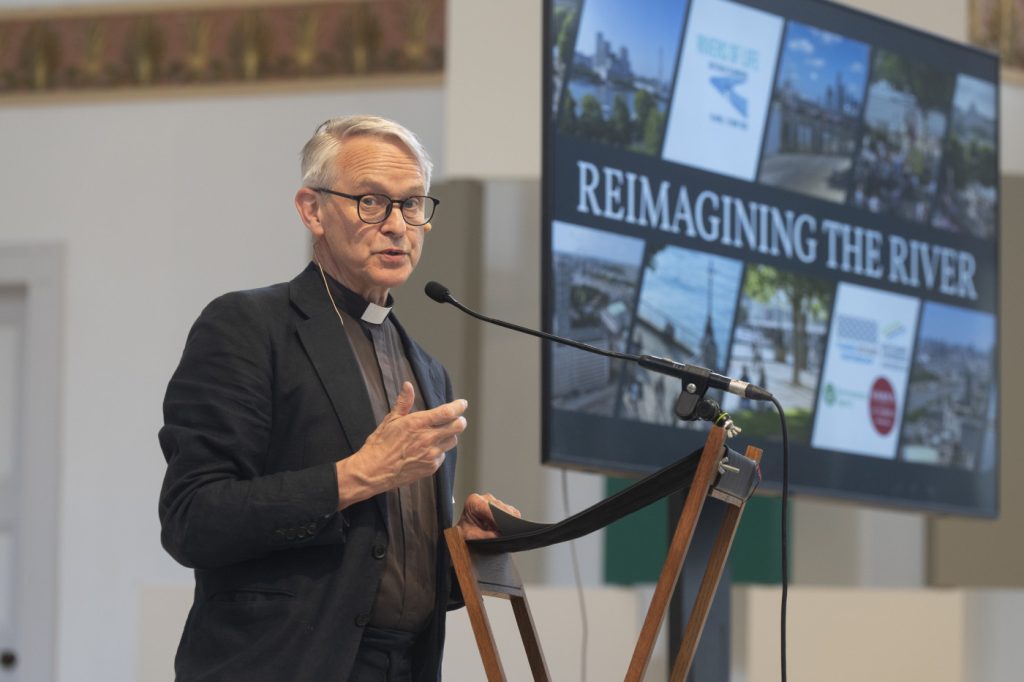
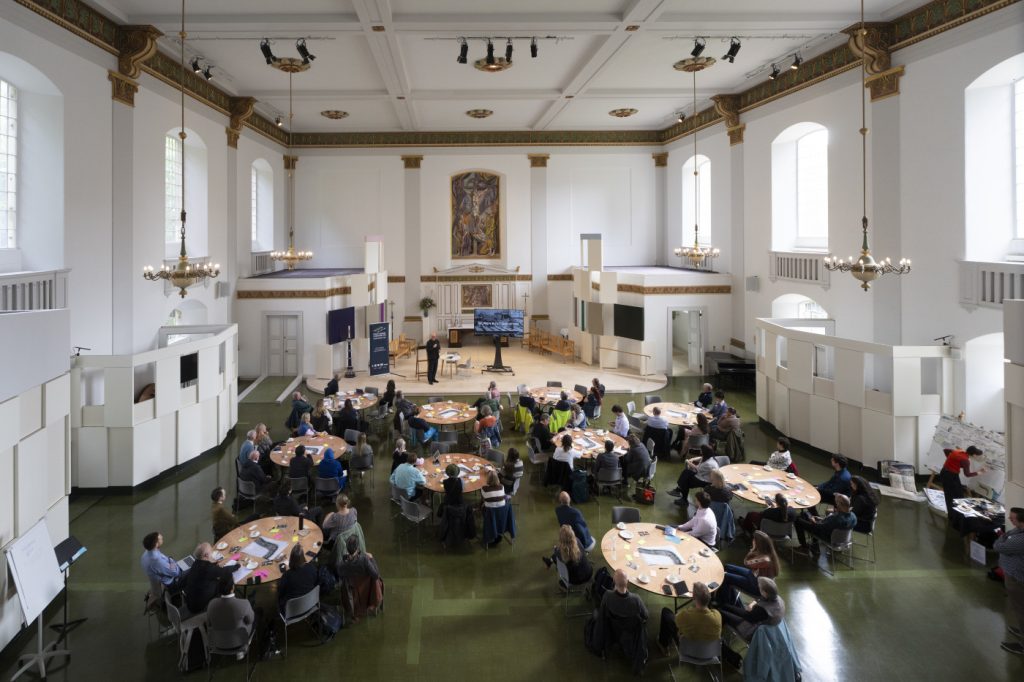
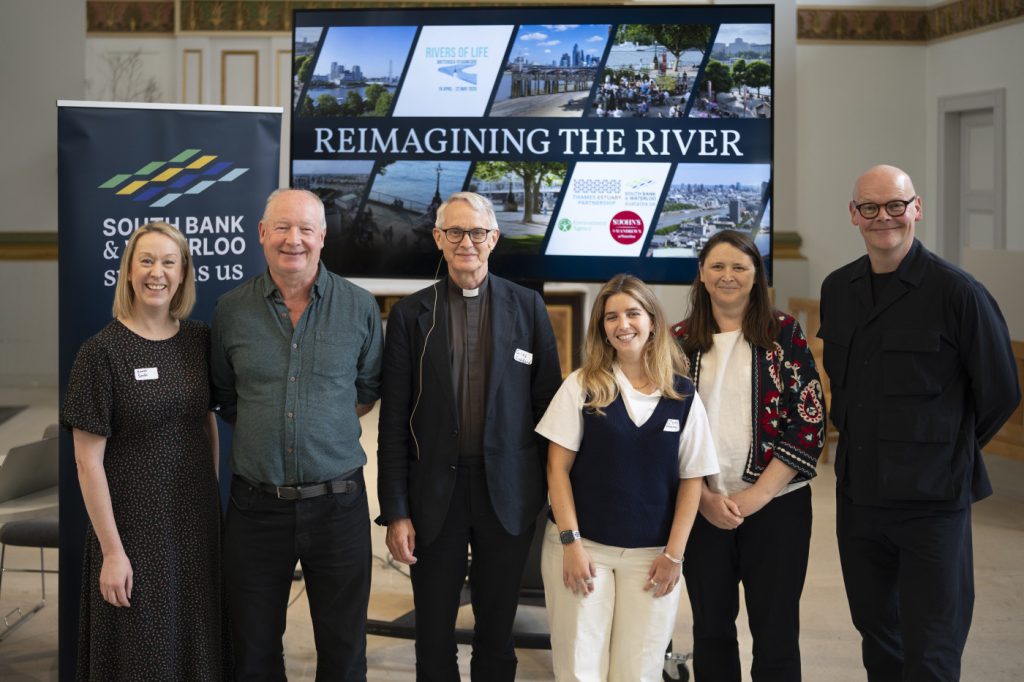
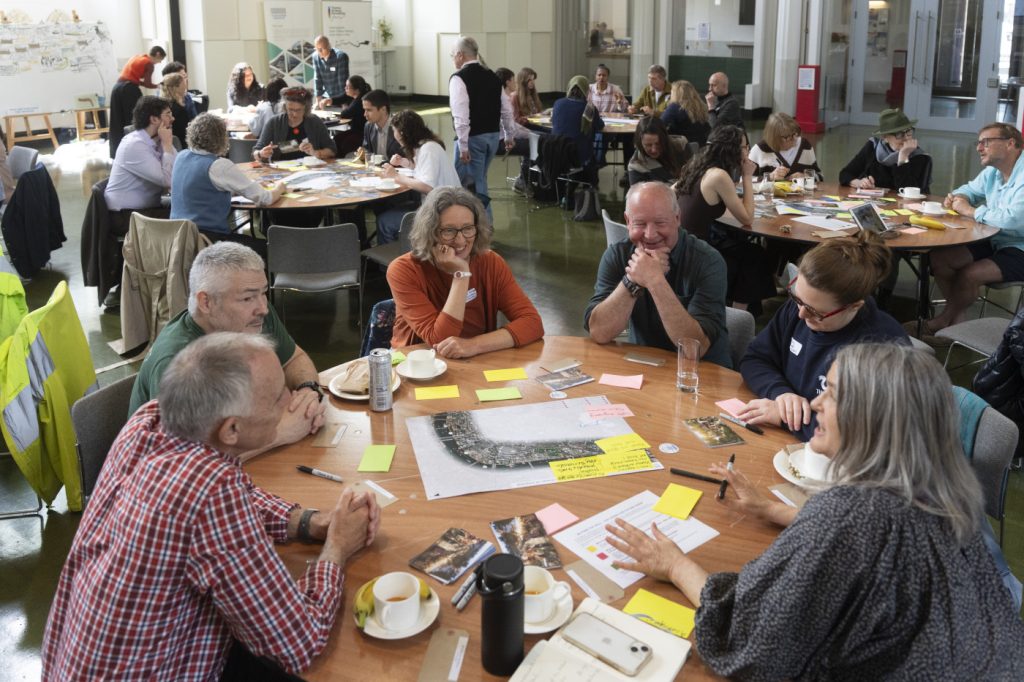
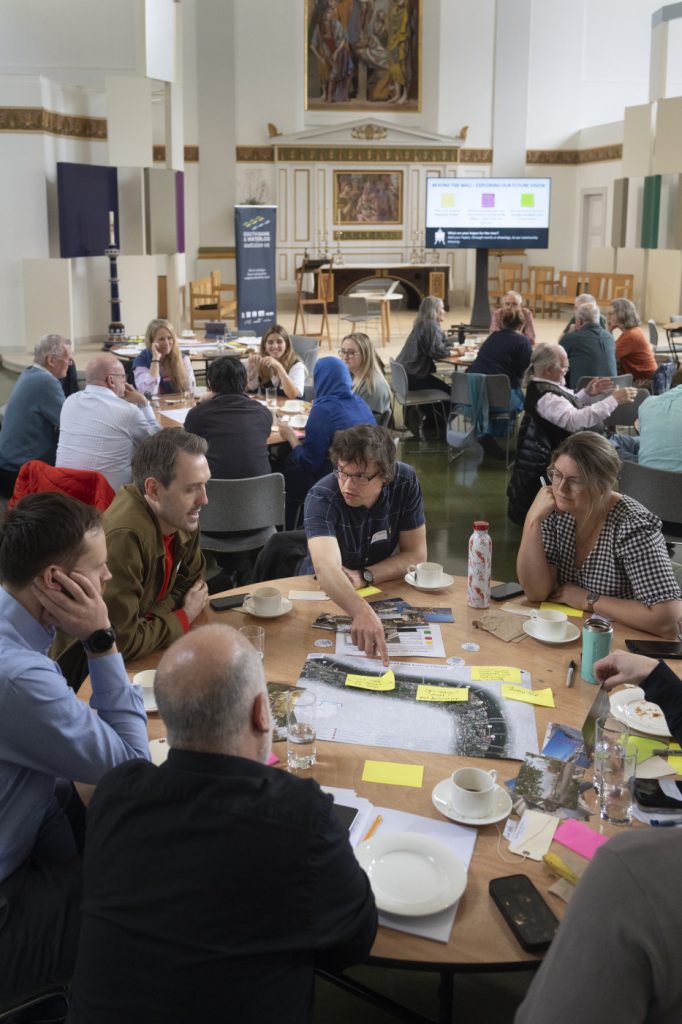
On Thursday 21st May we were delighted to gather our local community in Reimagining the River. In partnership with St Johns, Thames Estuary Partnership and the Environment Agency, we brought together 70 local residents, landowners, organisations, businesses and statutory bodies. This also formed part of St John's Rivers of Life Festival.
Together we explored how the need to strengthen local flood resilience – through raising our Thames river wall – can be reframed as not just an infrastructure challenge but an opportunity to think more creatively about the river and riverside. It was wonderful to see our community sharing local stories of connection to the river and their visions for its future.
South Bank’s watery history
David Sweetland of A London Inheritance blog opened the morning grounding our discussions in the area’s rich history; from the discovery of a roman boat beneath County Hall dating back to 300 AD and the swampy Lambeth Marsh, through to reclamation, flooding and post war rubble before the Festival of Britain 75 years ago – an event that helped shape South Bank into the cultural home it is today.
He shared a tale of remarkable transformation, showing our riverside as an area always evolving. It provided a chance to look back as we move forward into this new era of change to respond to flood risk.
Looking to our adaptation needs
In understanding this changing environment we were joined by three speakers to step through the national, regional, and local strategic framework underpinning Thames resilience.
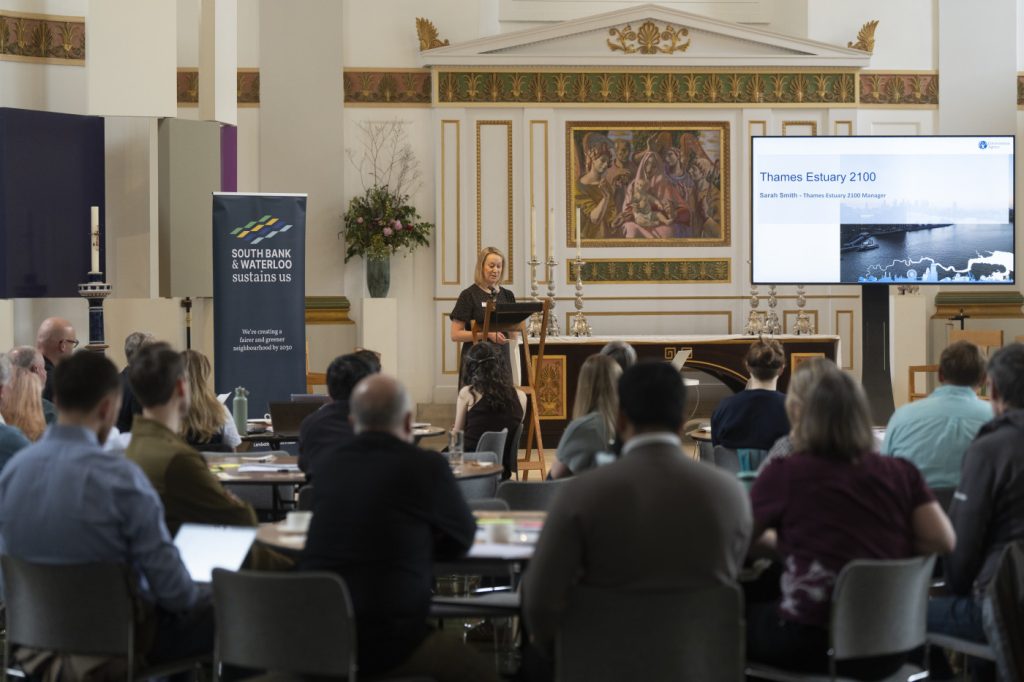
Sarah Smith from the Environment Agency shared key insights into the Thames Estuary 2100 strategy, outlining the role of the Environment Agency, the long-term risks posed by the river, and the steps needed to mitigate them. This includes the requirement for local authorities to develop riverside strategies by 2030 to integrate localised defence raising and flood protection into placemaking and growth strategies.
Nicole Gonzales-Tarrio of Arup provided a tangible example of how this can be brought to life through sharing the Lower Darent Riverside Strategy delivered alongside Dartford Borough Council and the Environment Agency. This contextualised what our local councils, Southwark and Lambeth, will be developing in the coming years alongside our local communities.
Benedita Moniz Baroseiro also introduced the Joint Thames Strategy work underway through the Thames Estuary Partnership. She explained how findings from this event will feed into the Thames Strategy London Central; a strategy bringing together a collective vision for the protection and improvement of the Thames riverside anchored in managing flood and climate resilience alongside protecting historical and social value.
River regeneration precedents
To spark bold thinking about the future, Ole Schrøder of Third Nature showcased flood resilience and public realm projects in Copenhagen alongside other standout examples of global waterfront regenerations. It highlighted how infrastructure and resilience challenges have unlocked wider benefits in placemaking, biodiversity and local identity. In a rapid world tour we jumped from Venice to New York, Paris, Seoul, Berlin, Toronto, Basel, Bordeaux and Dortmund hearing inspiring examples of reimagined spaces before arriving back in London and examining the ‘what if’s…’ of futures closer to home.
Beyond the wall – exploring our future vision
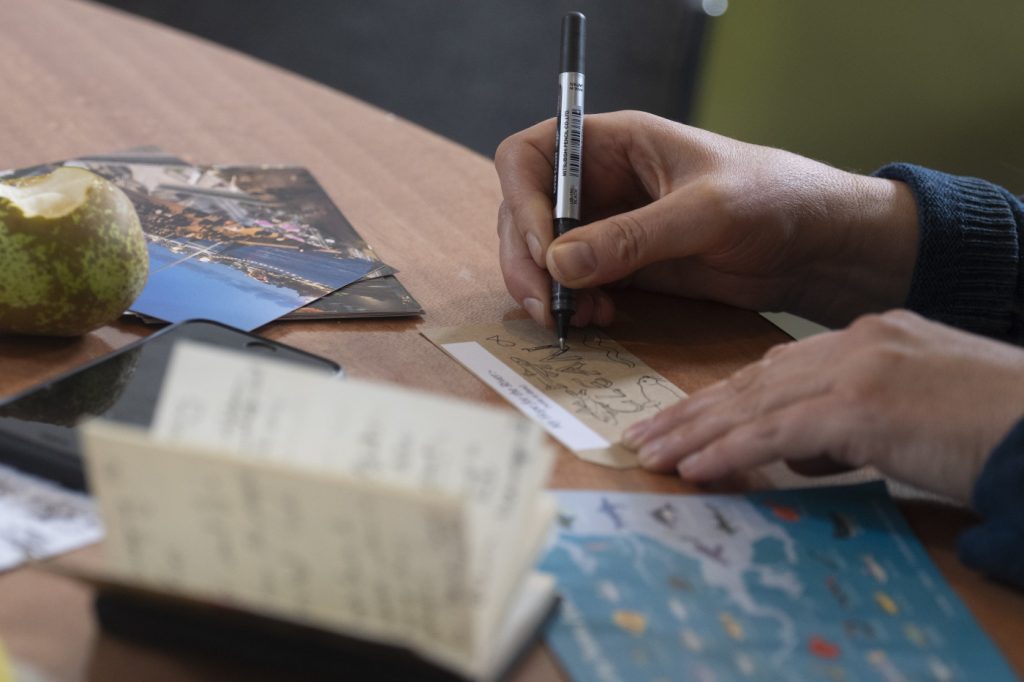
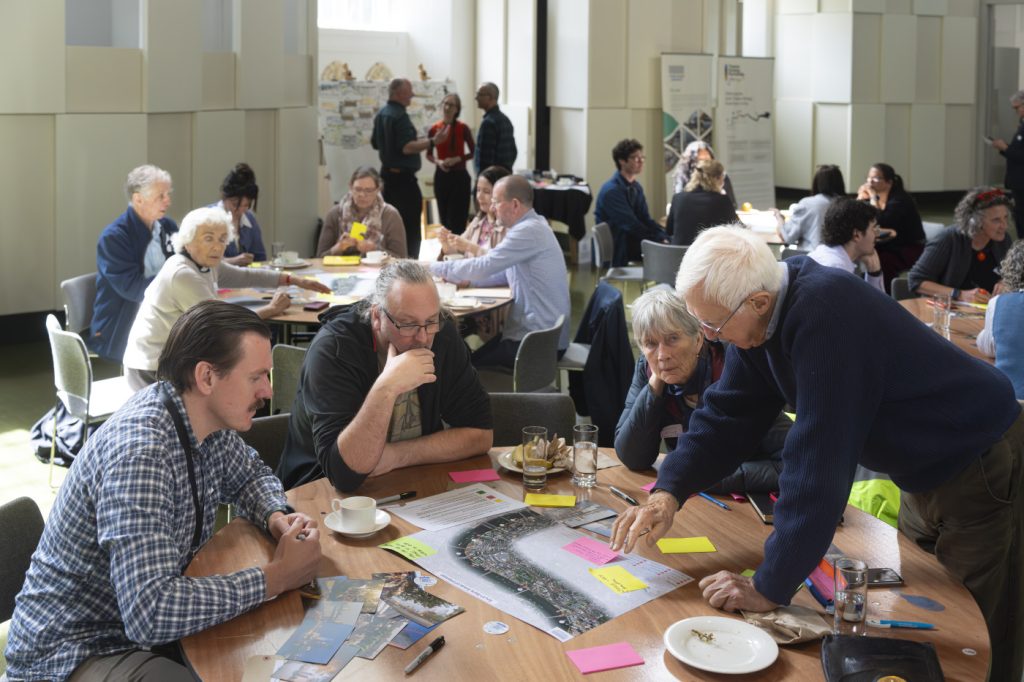
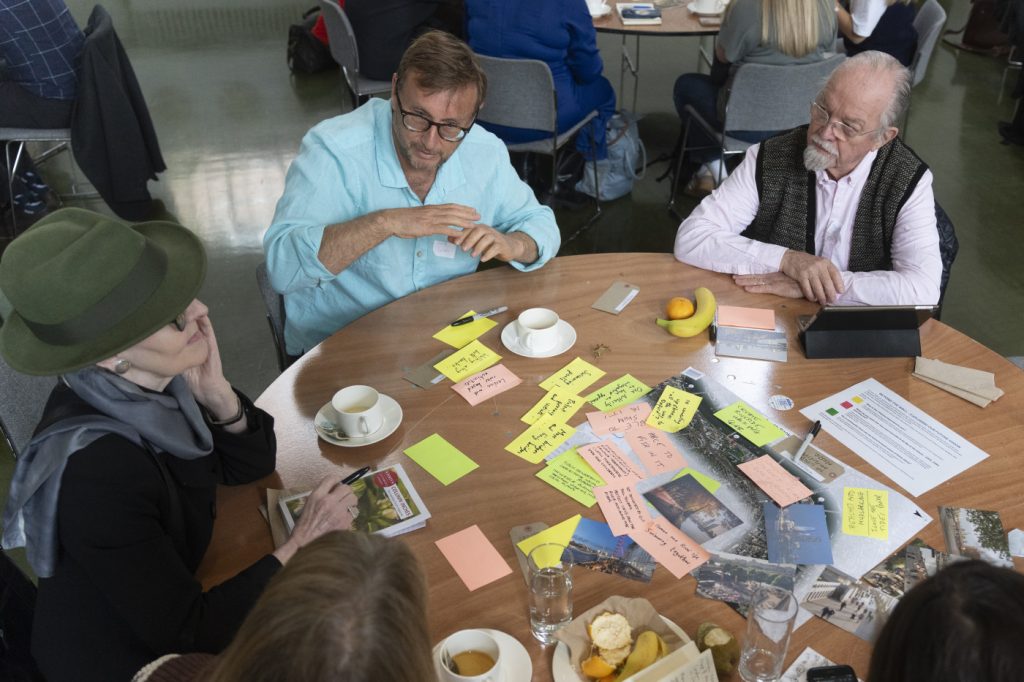
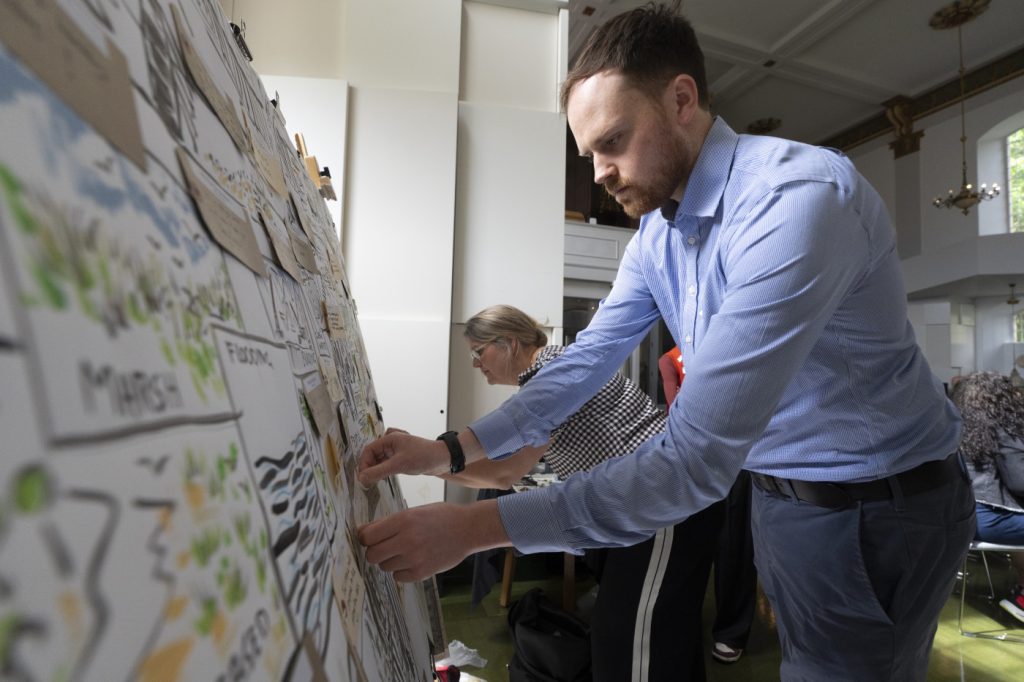
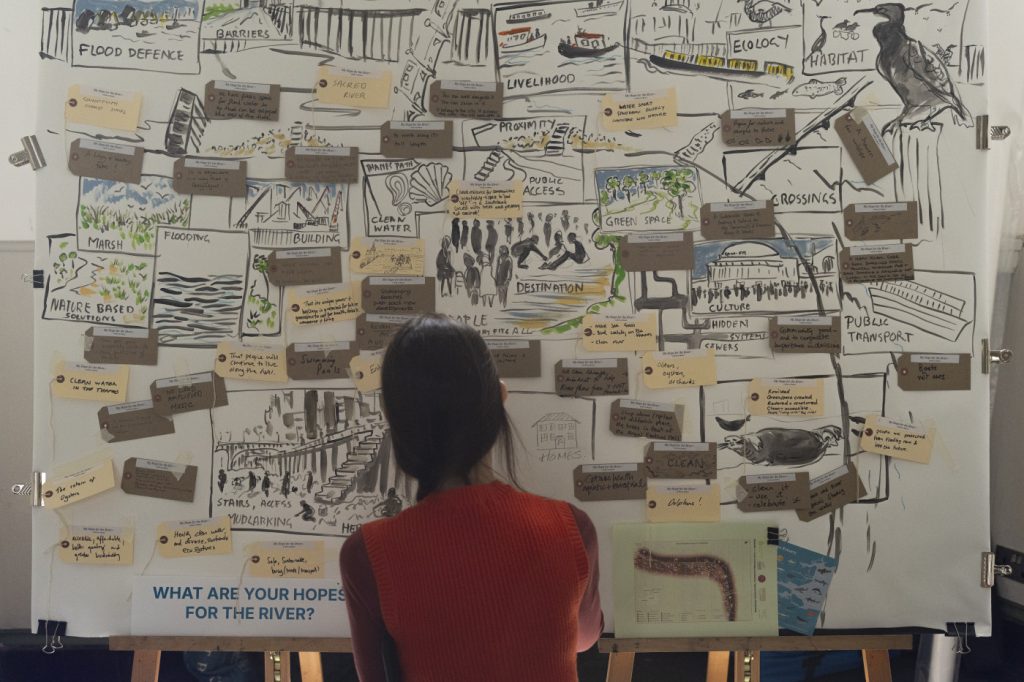
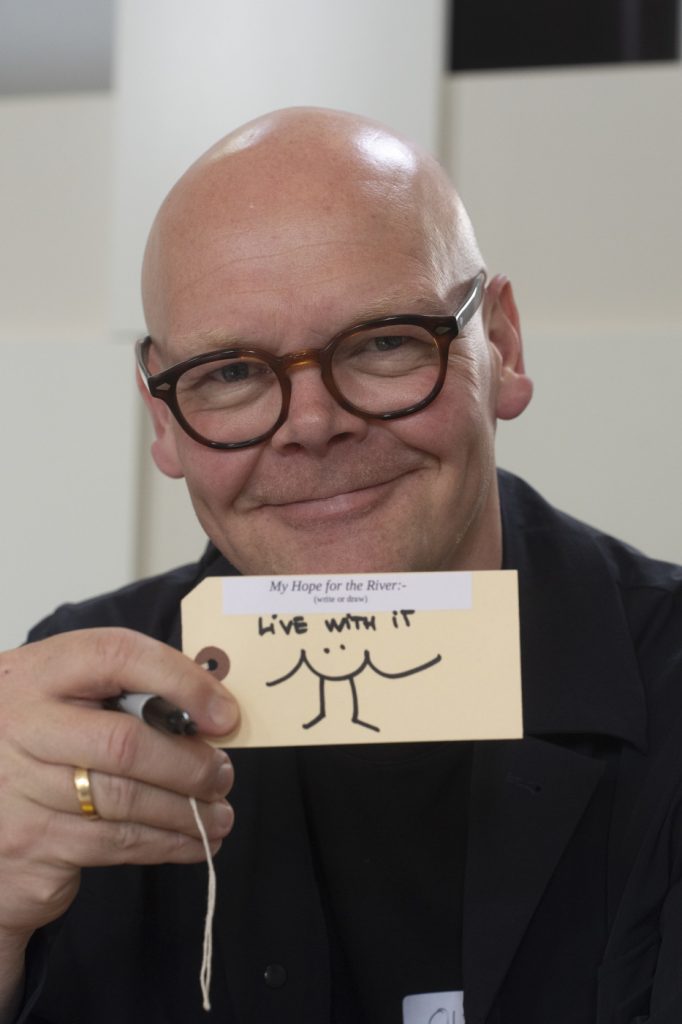
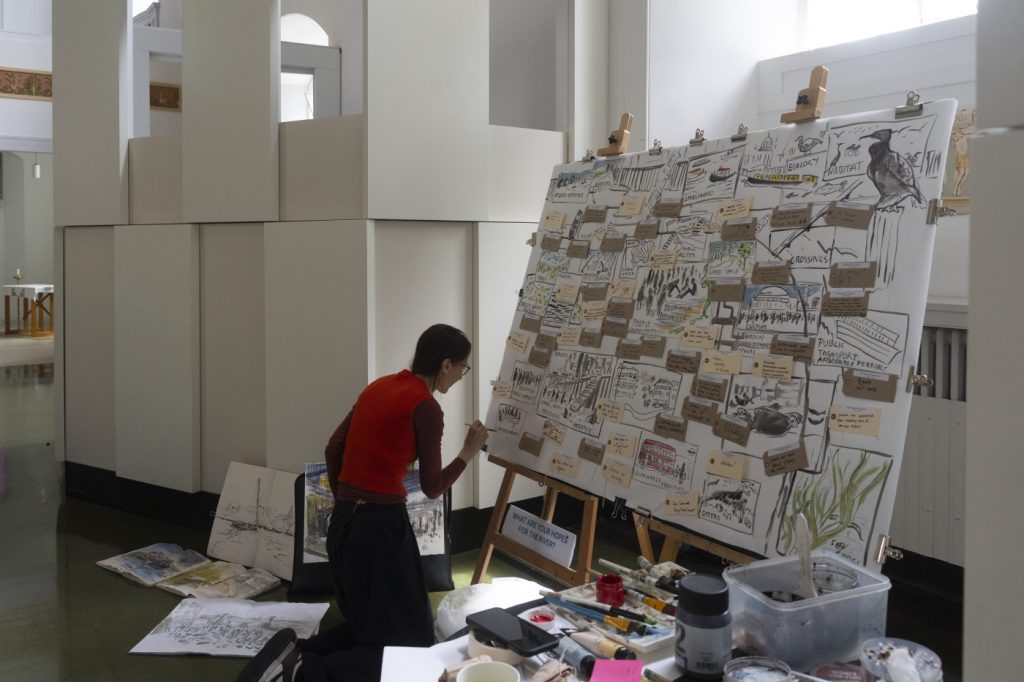
Building off these presentations, attendees were invited to join in this visioning through workshop activities and art.
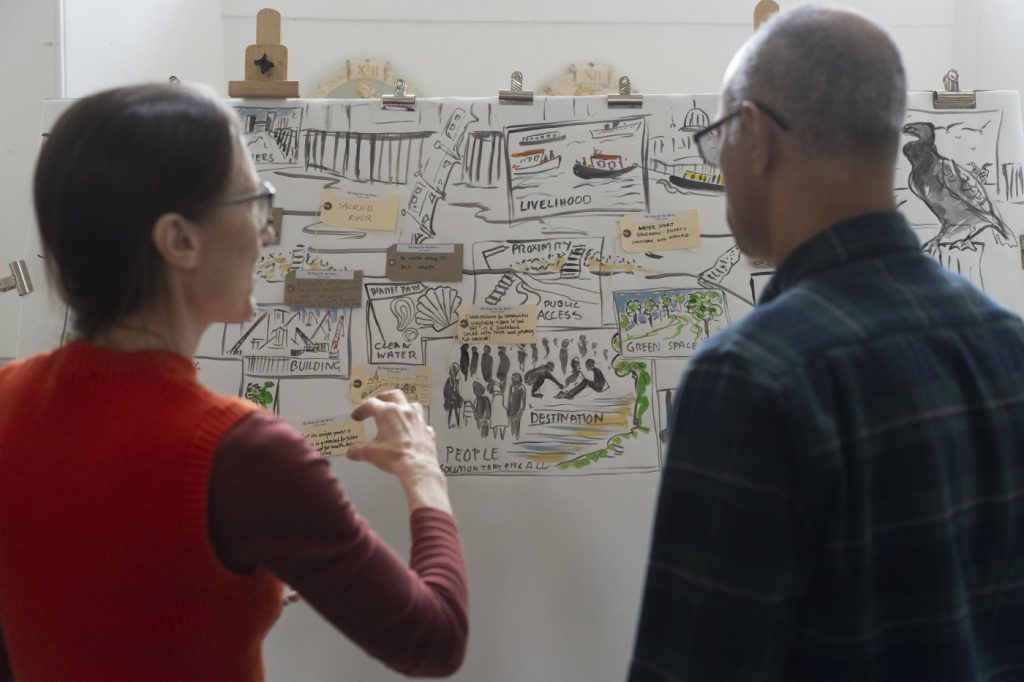
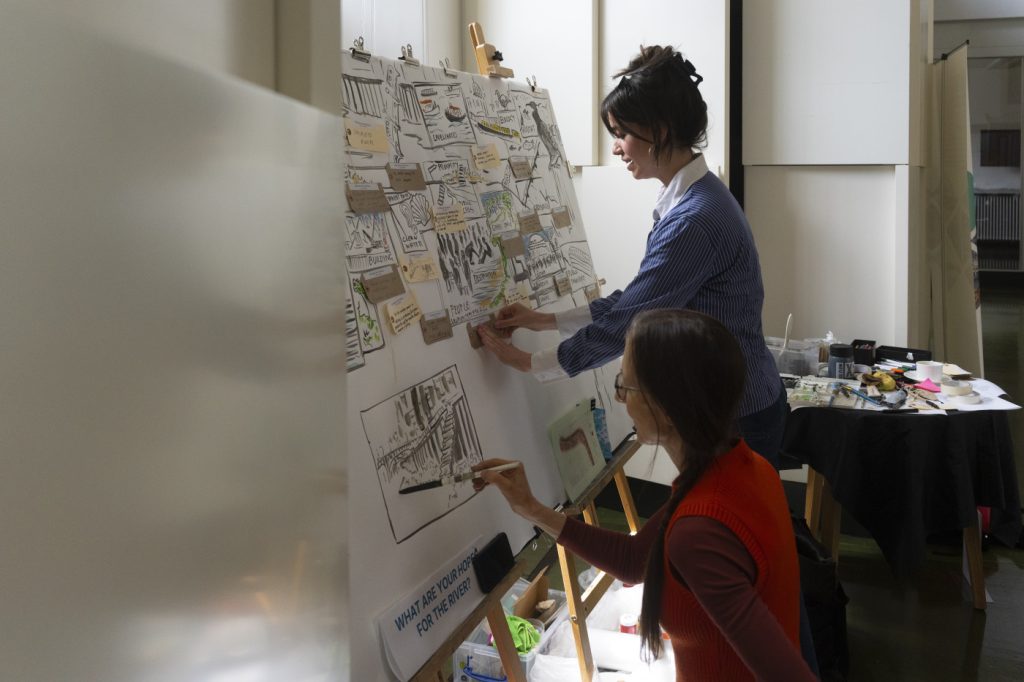
Alice Angus, artist in residence at local Topolski Studio led a collective drawing capturing our attendees’ hopes for the river. This forms part of Alice’s wider work exploring common wealths like clean air, water, ecosystems and healthy communities on this 75th anniversary of the Festival of Britain.
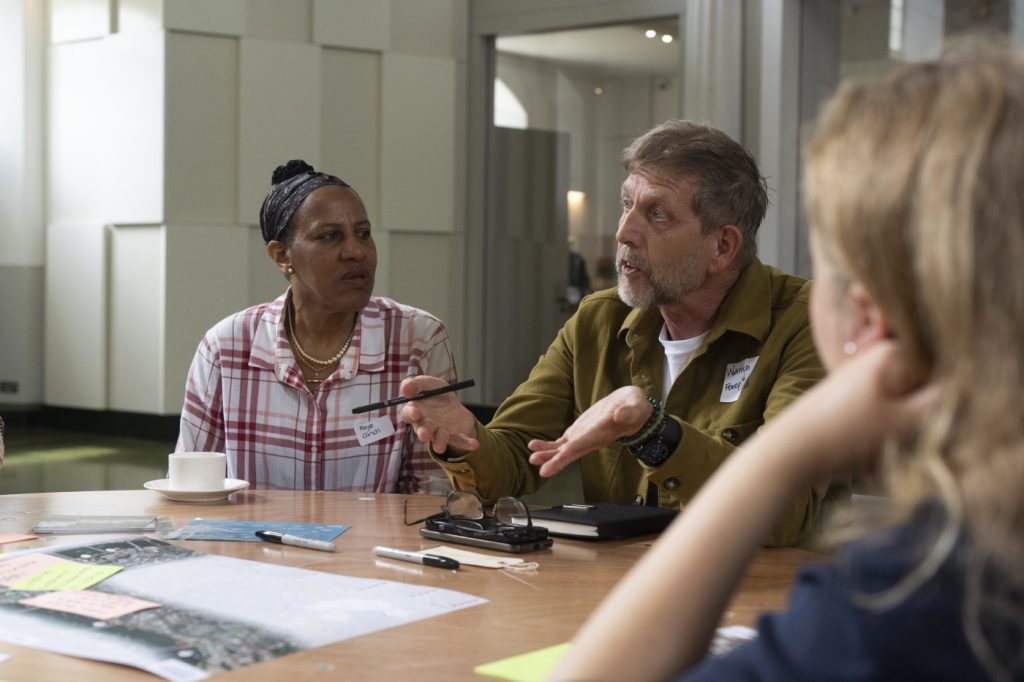
Workshop discussions were centred on three key questions:
- Why is the Thames important to you or your organisation?
- What do you want our river and riverside to be like in the future – 2050, 2090 and beyond?
- As a community how can we move forward some of these ideas?
Through these conversations, we heard a shared hope for a cleaner, greener, and healthier, river and riverside. Many spoke of this landscape at the heart of the city as London’s largest open space with the river valued as a place for connection – connecting people with neighbours, with nature and with other communities along its length. Local residents described the foreshore as their sanctuary and a place of exploration and play across generations. And at the heart of these reflections was a strong local interest in helping shape this next chapter of resilience and transformation for the river and South Bank.
.
A huge thank you to attendees for all their contributions. Please stay tuned as we collate together in more detail the wonderful insights shared. The summary will be fed into strategic processes like the Thames Strategy London Central and upcoming local riverside strategies alongside shaping community-level next steps through South Bank & Waterloo Sustains Us.
.